
Portugal is perhaps best known for Port, but there is far more to the country’s wine story than its famous fortified wines. From the granite slopes of the Douro to the coastal vineyards of Vinho Verde and the sun-drenched plains of the Alentejo, Portugal is home to an extraordinary diversity of landscapes, grape varieties and wine styles.
With hundreds of indigenous grape varieties and a long history of winemaking, the country offers plenty to explore beyond the bottles most familiar to us. Fresh, mineral whites, elegant reds, age-worthy wines from old vines and distinctive regional styles are all form part of Portugal’s modern wine landscape.
In this guide, we’re looking beyond Port to explore some of the regions, grapes and wines that are putting Portugal firmly on the map for still wine.
Vinho Verde: Fresh, Vibrant and Far More Diverse Than You Might Think
For many people, Vinho Verde is one of their first introductions to Portuguese wine. The region, in the country’s north-west, is best known for its fresh, lively whites, often with bright acidity, citrus and green fruit flavours. Traditionally, some Vinho Verde wines have also had a slight spritz, adding to their refreshing character.
But there is considerably more to Vinho Verde than a simple, light summer white. The region is home to a number of indigenous varieties, with Alvarinho and Loureiro among the most important, and producers are increasingly making wines with greater texture, concentration and ageing potential.
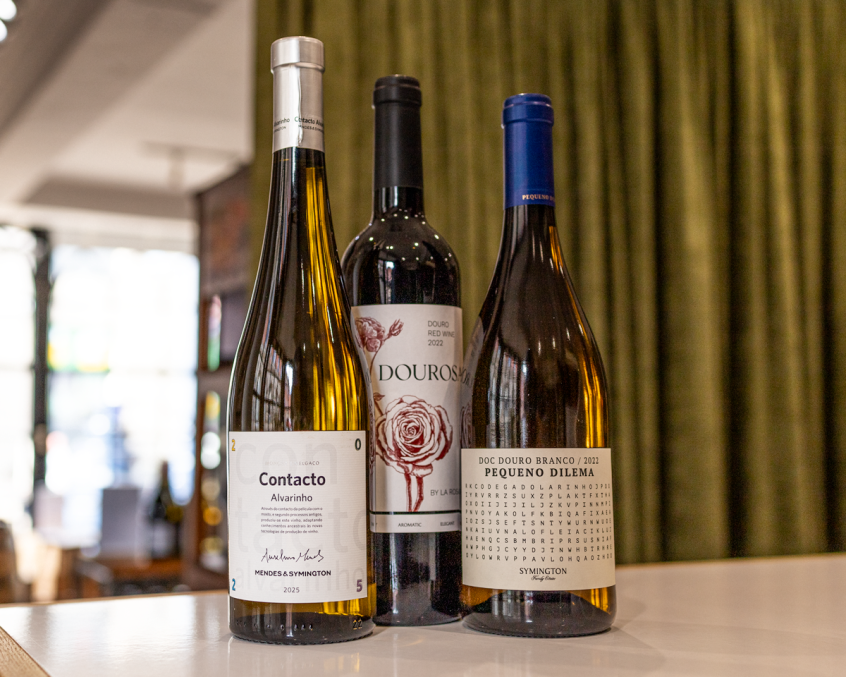
Quinta do Ermizio’s Chin Chin is a bright and energetic expression of Vinho Verde, while Anselmo Mendes’ Alvarinho Contacto shows another side of the region. Made from Alvarinho, it has more weight and structure, with the grape’s characteristic citrus and mineral character balanced by a fuller, textured palate.
Alentejo: A Warmer Side to Portuguese Wine
Further south, the Alentejo offers a very different expression of Portuguese wine. The region is generally associated with a warm, dry climate and generous, fruit-driven wines, but there is considerably more variation within the region than this reputation might suggest.
In the Portalegre sub-region, close to the Serra de São Mamede, altitude plays an important role. Quinta da Fonte Souto sits between around 490 and 550 metres above sea level, where the cooler conditions help to preserve acidity and freshness in the grapes. The combination of altitude, granite and schist soils and low-yielding mature vines allows the estate to produce wines with both concentration and finesse.
The estate is part of the Symington family’s expansion beyond the Douro, and its wines demonstrate just how varied Portugal’s terroirs can be. The Quinta da Fonte Souto Branco is centred on Arinto, with Verdelho, and combines the grape’s naturally fresh character with greater texture and complexity from lees ageing.
The Quinta da Fonte Souto Tinto, meanwhile, brings together some of the varieties that have become synonymous with Alentejo, including Alicante Bouschet, alongside Trincadeira, Cabernet Sauvignon, Syrah and Alfrocheiro. The result is a structured, concentrated red, but one where the estate’s elevation helps retain freshness and balance.
Together, the two wines are a useful reminder that Alentejo isn’t simply about ripe, full-bodied reds. From its warmer plains to the higher, cooler vineyards around São Mamede, the region offers a much broader spectrum of styles – another reason to look beyond Portugal’s better-known fortified wines.
The Douro – More Than Port
The Douro is synonymous with Port, but the same vineyards that produce some of the world’s most celebrated fortified wines can also produce exceptional dry wines. Few producers demonstrate this versatility better than Quinta de la Rosa.
Located in the heart of the Douro, Quinta de la Rosa has a long history of producing Port, but today its portfolio extends well beyond the fortified style. Its dry wines showcase the character of the same dramatic schist soils and steep vineyards, with native Portuguese varieties bringing a distinctly Douro identity.
The La Rosa White is a great example of how refreshing and precise Douro whites can be, while Dourosa takes the region in a richer, more structured direction as a dry red. Both offer a different perspective on a region that many wine drinkers still primarily associate with Port.
It is this ability to produce both styles from the same landscape that makes producers such as Quinta de la Rosa so interesting. Rather than Port and dry Douro wine being separate stories, they are two expressions of the same remarkable terroir.
A New Generation of Dry Wine
Quinta de la Rosa is part of a much broader story. While Port remains one of Portugal’s great wine traditions, producers across the country have increasingly turned their attention to dry, still wines, giving consumers an opportunity to experience Portuguese vineyards in a different way.
There are several reasons for this shift. Portugal has an extraordinary wealth of indigenous grape varieties, many of which have historically been used in Port or blended into regional wines but are now being explored in their own right. At the same time, producers have been investing in vineyard management, winemaking and a better understanding of individual sites, allowing them to make increasingly precise and distinctive dry wines.
The Douro is a particularly good example. Its steep, schist-covered vineyards and warm, dry climate might be best known for Port, but they can also produce concentrated, structured reds and increasingly compelling whites. For producers with generations of experience in these vineyards, dry wine offers another way to express the character of the Douro.
Symington Family Estates is one of the producers exploring this potential, alongside its long-established Port houses. Wines such as the Pequeno Dilema Branco, demonstrate the diversity that can be found in the Douro beyond fortified wine, with a focus on the region’s native varieties and the freshness that can be achieved in its higher-altitude vineyards.
For wine drinkers, this growing focus on dry wine makes Portugal particularly exciting. The country isn’t abandoning its famous fortified wines; instead, it is giving us more ways to discover what its vineyards can do.