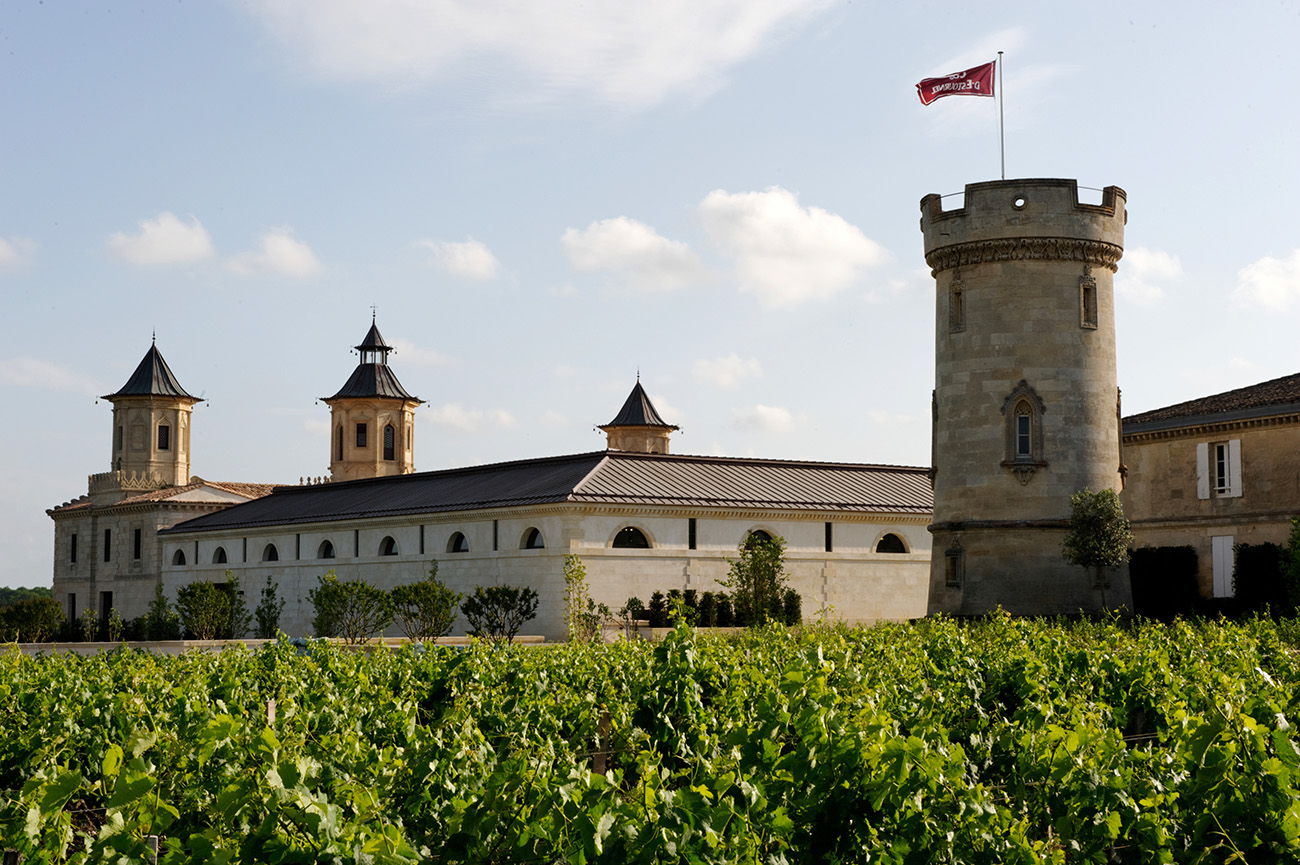
Few Bordeaux estates have an identity quite as distinctive as Cos d’Estournel. Its iconic pagodas have made the estate instantly recognisable, while its wines have earned a reputation for combining power, elegance and freshness.
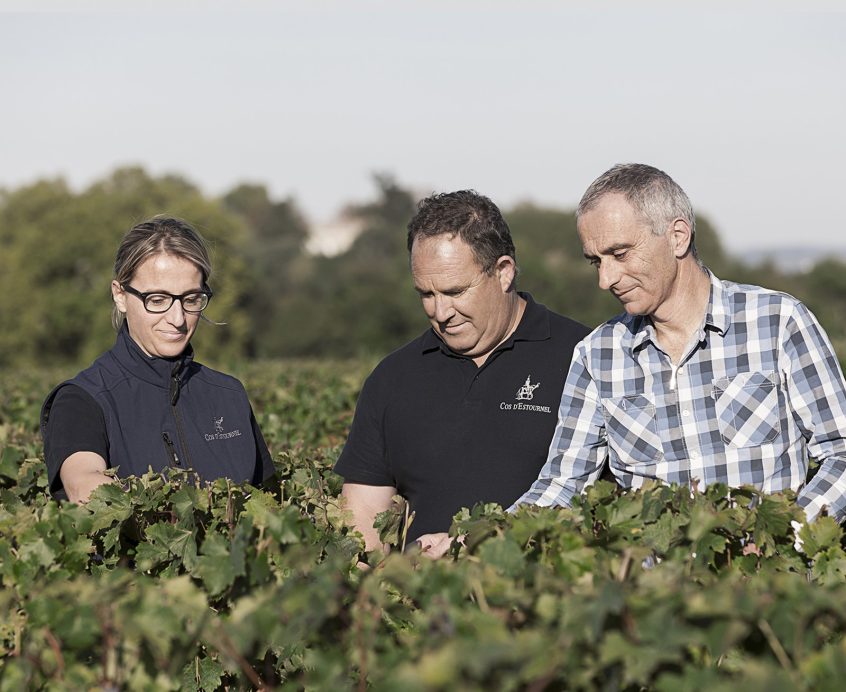
For this issue, we spoke to Cos d’Estournel’s Technical Director to explore what makes the estate and its wines so distinctive. He shares his thoughts on the defining characteristics of a great Cos, how the wines have evolved across recent vintages, and which older vintages he believes are drinking particularly well today.
The conversation also looks beyond the wines themselves, from the relationship between the Grand Vin and Pagodes de Cos to the future of Bordeaux and the challenges and opportunities facing the fine-wine market.
Read the full interview below, then explore our current selection of Cos d’Estournel, with vintages from the estate available to purchase.
Cos d’Estournel has one of the most distinctive identities in Bordeaux. In your view, what truly sets Cos apart from the other great estates of the Médoc?
It is the meeting of a terroir and a history – the story of a founder who believed in the uniqueness and singularity of this place. Louis-Gaspard d’Estournel was the first to believe in it. He devoted his life to building this estate, convinced of the exceptional quality of its terroir.
Cos’s singularity lies in particular in its position on the edge of the plateau, its eastern and southern exposures, the marshes surrounding the vineyard and the hill, but also in this mosaic of soils, which creates a genuine synergy and a remarkable blending effect. As a result, we benefit from a distinctive microclimate and a heritage of old vines.
There is also Cos’s highly distinctive architecture, which is intimately linked to its history and to the personality of its founder.
Finally, this pursuit of innovation has continued over time, notably with the new winery inaugurated in 2008, which was particularly innovative for Bordeaux. In a way, we are continuing in the footsteps of Louis-Gaspard d’Estournel, thanks in part to our current owner, Michel Reybier.
In your view, what is the defining characteristic of a great Cos d’Estournel? Is there something you can immediately recognise when tasting the wine?
We often say that a great Cos must have “flesh”. It is a question of texture, of mouthfeel: something that envelops the tannins. There is this very distinctive velvety character.
Aromatically, we also find spices, which echo India and the history of Cos. It is a warm wine, without being hot, with a natural sense of opulence.
What also allows me to recognise a great vintage very early on is its persistence and, above all, the integration of the tannins. When the tannins are so well integrated that you almost forget they are there, even though they are very much present and provide the wine with its structure, that is a very good sign. They do not bring the tasting to an abrupt end; they emerge gradually and carry the wine through a long finish.
Cos is known for wines that combine power, elegance and freshness. How do you think that balance has evolved over recent vintages?
The terroir of Cos naturally brings power. The more we get to know it, the better we understand it.
But this power does not reveal itself immediately. The wine takes its time. During vatting, it gradually begins to show itself. Then, during ageing, it tightens up and develops, in particular, its spicy character. Finally, it is in bottle that it truly acquires its third dimension. Cos is a wine that reveals itself slowly.
Today, we work with grapes that are naturally riper than they used to be. So we try to be increasingly precise in our winemaking, capturing the fruit and preserving it.
We have moved from sometimes pushing for greater ripeness to a much more refined search for balance. Ripeness is now something that weather conditions allow us to achieve more easily. The challenge therefore lies elsewhere: preserving the fruit, freshness and distinction. All the work we are doing around biodiversity is also part of this approach. That is the new challenge.
Fine-wine collectors often have a particular vintage of Cos that they consider a benchmark. Is there a vintage that you personally return to time and again, and why?
Vintages evolve. We do not make wine today in the same way we did fifteen, twenty or thirty years ago. But what we see with great terroirs is that, ultimately, the influence of man remains relatively limited.
It can seem very apparent when the wine is young, through harvest dates or extraction choices, for example. But with time, the terroir takes over again and brings things back into b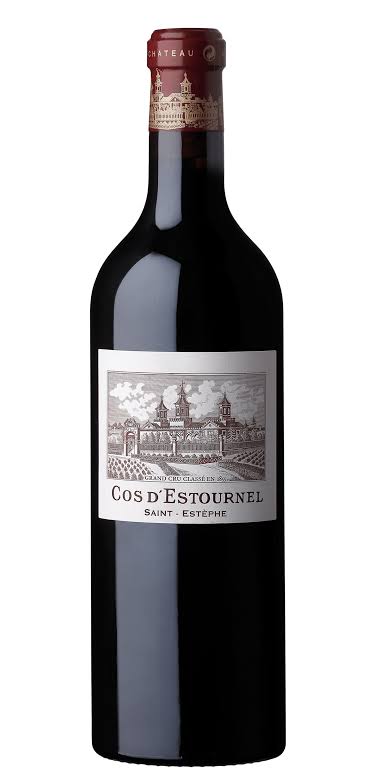 alance. In a way, it ultimately makes its own adjustments. I think that is one of the great qualities of exceptional terroirs.
If I had to mention two vintages today, I would say 2005, which is simply remarkable, even though it could be somewhat turbulent in its youth, and, more recently, 2022, which has a truly unique texture.
Looking at the wines currently in the cellar, which vintage of Cos d’Estournel do you think is drinking particularly well at the moment?
2015. It is beginning to enter a wonderful stage of its life. It has already acquired that third dimension that comes with ageing in bottle, while retaining some particularly compelling characteristics of its youth: energy and great precision of fruit.
Today, it is a very complete wine.
Pagodes de Cos is sometimes described simply as the estate’s second wine, whereas Cos refers to it as its other great wine. How would you explain the relationship between Pagodes de Cos and the Grand Vin?
Pagodes de Cos comes from dedicated plots. These include more clay-rich terroirs and, generally, soils planted with younger vines, which produce higher yields. Ripening therefore occurs slightly later, often under cooler conditions.
This naturally results in wines that are less tannic and whose fruit expresses itself more quickly.
Pagodes and Cos d’Estournel nevertheless share a great deal: the same place, the same particular attention to the texture of the tannins, the benefits of gravity, and our entire approach to viticulture. This includes, in particular, our work with cover crops – the idea of coexisting with grass rather than fighting against it – as well as the organic conversion of the vineyard.
The difference lies notably in the structure. Pagodes is naturally less tannic, which makes its fruit more immediately perceptible. It is a serious wine, but one that is more approachable and generous.
Cos requires greater concentration from the person tasting it. It takes you by the hand and encourages you to take the time to drink it and understand it. Pagodes has something more immediate, more self-evident.
When you think about the future of Cos d’Estournel, what excites you most?
There is all the work we have been carrying out for several years to reshape and restructure the vineyard.
Some of the vines planted over the past twenty years are now reaching maturity and are beginning to play a full role in the production of our great wines.
There are also our massal selections, which are beginning to produce fruit. This is the result of around ten years of work based on our own vine heritage. We have great faith in these plantings propagated from our own vines, and we are very curious to see what they will bring in the years ahead.
Finally, there are all the benefits of organic conversion and the decision to stop using herbicides. This is helping to make the vines more resilient. In particular, they are developing deeper root systems, becoming more firmly anchored in their terroir and less dependent on climatic fluctuations.
If you were not working in Bordeaux, which other wine region would you have liked to work in?
I would have liked to make Pinot Noir in Burgundy.
It is a grape variety that leaves very little room for error: sometimes you are working with just a single plot, and you cannot afford to get it wrong. That is precisely what would make the challenge so interesting!
Our thanks to Dominique Arangoïts for sharing his insight into the estate, its wines and the philosophy behind Cos d’Estournel. From the Grand Vin to Pagodes de Cos, the range offers a fascinating opportunity to explore the character of this distinctive Saint-Estèphe estate across different vintages.
Or direct enquiries to sales@nickollsandperks.co.uk