
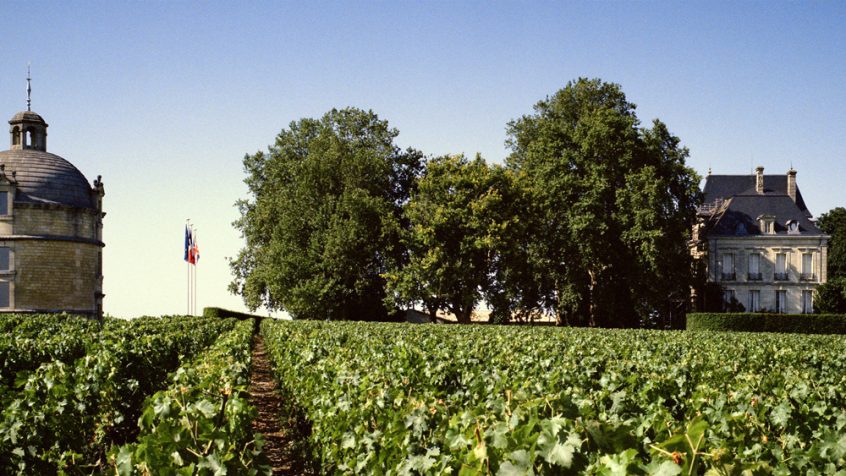
Château Latour, one of Bordeaux’s most revered First Growth estates, has long been synonymous with power, precision, and longevity in its wines. In a bold move back in 2012, Latour made the ground-breaking decision to step away from the traditional En Primeur system – a centuries-old practice where Bordeaux wines are sold as futures while still in barrel. Instead, the estate chose to release its wines only when they believe each vintage has reached optimal maturity, offering collectors and enthusiasts a fully realised expression of Latour’s signature depth and structure.
Today, Latour typically unveils its releases in the spring, with 2026 set to mark the arrival of the highly anticipated 2019 vintage. As always, quantities are extremely limited, reflecting the estate’s commitment to quality over volume. To ensure you don’t miss out on this rare opportunity, we encourage registering below to secure first access to the opening offer in the coming weeks.
The Vintage
The 2019 vintage has emerged as one of Bordeaux’s modern benchmarks.
An intensely warm, dry summer – moderated by well-timed rainfall – ensured optimal ripening conditions, while crucial mid-September rains refreshed the vineyards and allowed for a later harvest, favouring Cabernet Sauvignon in particular.
The wines are marked by richness, depth and remarkable precision, combining generous fruit with structure and freshness. The Upper Médoc stands out as the epicentre of excellence, though the vintage is far from uniform, rewarding careful château selection. Pomerol and Saint-Émilion also produced superb wines, offering opulence alongside balance.
At Château Latour, the vintage’s strengths are expressed with particular clarity: Cabernet Sauvignon achieved outstanding maturity, resulting in a wine of concentration, composure and remarkable ageing potential – a compelling example of the precision and longevity that define the finest wines of 2019.
The Critics
The 2019 Latour has a discrete nose that unfurls gradually, taut and fresh, with touches of graphite and cedar. This just wants to underplay everything. The palate is medium-bodied with sappy black fruit framed by fine tannins. Very precise though it feels as if it is closing down on the finish. Yet there is clearly a very long aftertaste. A really cerebral Left Bank for long-term consideration.
98/100, Neal Martin, Vinous [January 2023]
The 2019 Latour is a profound wine in the making, and it will surely emerge as one of the most long-lived wines of the vintage, as well as one of the greatest. Unwinding in the glass with scents of rich cassis fruit, English walnuts, cigar wrapper, black truffle, loamy soil and violets, it’s full-bodied, layered and muscular, with huge depth at the core, ripe tannins and lively acids, concluding with a long, seemingly interminable finish. Checking in at 14.1% alcohol, this prodigious Latour will require two decades to hit its stride, but it will be more than worth the wait.
99+/100, William Kelley, Wine Advocate [April 2022]
Deep, dark, garnet in color, the wine is equally dark in its fruit, cigar wrapper, smoke, espresso, leaf, cedar, and spice profile. With elegance, power, firmness, and silkiness, the wine on the palate immediately cuts a wide swatch across your palate. All that regal, ripe, sweet, fruit and crushed gravel stick with you almost seamlessly for more than 50 seconds until you reach the endnote with its salty, mineral-driven kick in the endnote. This is a fabulous Latour that will age for decades. The wine was made from a blend of 92.5% Cabernet Sauvignon and 7.5% Merlot, 14.1% ABV. The Grand Vin was produced from only 36% of the harvest. Drink from 2030-2070.
99/100, Jeff Leve, The Wine Cellar Insider [July 2022]
By turns powerful and extremely subtle, the 2019 vintage at Latour highlights the resculpting and evolution of this 1st Growth over the past decade. Nuanced aromatics of peony, gunsmoke and campfire. Things take their time in the glass, with waves of charcoal, slate and black truffle weaving through supple blackcurrant, raspberry and mulberry fruits. Sappy acidities let light through to the muscular, take-no-prisoners, tannins. Clever winemaking, expansive yet concentrated, with hidden power and depths that will need a good decade before opening up and yet already seductive. Delivers on it En Primeur promise. 36% of overall production. 100% new oak. Overall yield of just under 45hl/h, unusual as the average yield at Latour is closer to 35hl/h, largely due to old vines and the powerful clay that sits under the gravel here
99/100, Jane Anson, Inside Bordeaux [January 2022]
Forts de Latour 2020
Released alongside the Grand Vin, Les Forts de Latour 2020 exemplifies the estate’s precision and meticulous vineyard selection. The blend is predominantly Cabernet Sauvignon, complemented by carefully chosen Merlot from younger parcels, resulting in a wine of structure, depth, and poise. The growing season, warm and dry with well-spaced rainfall, allowed for optimal ripening, producing grapes of excellent concentration and balance. On the palate, the wine reveals layers of cassis, graphite, subtle cedar and mineral tension, framed by finely structured, ripe tannins and vibrant acidity. With careful élevage in new and lightly used oak, Les Forts de Latour 2020 is approachable earlier than the Grand Vin but retains substantial ageing potential, rewarding both near-term enjoyment and extended cellaring over the next 10–15 years.
The Estate
Chateau Latour was classified as a First Growth producer under the 1855 Bordeaux Classification. The estate lies at the very south-eastern tip of Pauillac within the Medoc, only a few hundred metres from the banks of the Gironde estuary. This renowned producer creates three highly regarded red wines; Grand Vin, Les Forts de Latour, and Pauillac.
Vines have existed on this estate as far back as the 14th Century, with Latour’s wines receiving recognition as early as the 16th Century. Truly a historic producer. From 1670 began a lineage of family ownership which was not broken until 1963.
The early 18th Century was the golden age for Bordeaux producers in many ways. As the English aristocracy developed a taste for wine from Bordeaux, trade grew rapidly.
Very quickly, Latour stood out in terms of quality and price. In 1714, a barrel of Latour was worth 4-5 times more than a typically Bordeaux. This ratio continued to rise as Latour became well-established.
Three quarters of the estates shares were sold to The Pearson Group under Lord Cowdry in 1963. This culminated in the modernisation of production; heavily investing in research, expanding vineyards, and replacing old-oak with stainless steel vats.
Then in 1993, Latour retuned to French ownership once again after being purchased for £86 million by Francois Pinault. The next interesting change occurred in 2012 when they made the decision to stop selling the Chateaus wines en primeur.
The estate has 78 hectares of vineyard, 47 of which belongs to L’Enclos. This area is exclusively used for the production of Grand Vin. The composition of grape varieties is 76% Cabernet Sauvignon, 22% Merlot, and 2% of Cabernet Franc and Petit Verdot. Production annually equates to around 18,000 cases.
Register your interest in the release here
Or direct enquiries to sales@nickollsandperks.co.uk